
TL;DR
Strong Malayali AI portraits come from precise details: kasavu saree or mundu, Kerala lighting, correct jewelry, natural pose, and a strict negative prompt. For professional or social profiles, the safest workflow is to preserve the original face, keep styling culturally accurate, and generate several polished versions before choosing one.
Malayali traditional look AI photo prompts work best when they describe clothing, setting, face preservation, lighting, and cultural context in one clear instruction. Generic "Kerala style" prompts often create pretty images, but they can miss the realism of kasavu fabric, jasmine flowers, temple lamps, and natural South Indian skin tones. [Malayali traditional look AI photo prompt]: a text instruction that guides an AI image model to create or restyle a portrait using Kerala-inspired attire, grooming, scenery, and photographic style. For people who need polished profile images, Looktara can turn this prompt-driven idea into clean, professional headshots without making the result look costume-like.
Table of Contents
What are Malayali traditional look AI photo prompts?
Malayali traditional look AI photo prompts are structured text descriptions that guide AI tools to create Kerala-inspired portraits with authentic attire, natural facial identity, and context-aware styling. A good prompt names the outfit, occasion, background, lighting, camera style, and what the model must avoid.
Wikipedia describes folk costume as traditional attire linked to the cultural, religious, or national identity of a group or region. In a Kerala portrait prompt, that means the outfit is not a random white-and-gold costume; it signals place, language, festival, family identity, and social context.
For the Malayali diaspora, traditional portraits also carry memory and belonging. Wikipedia's description of the Malayali diaspora covers Malayali people living outside Kerala, Mahé, and Lakshadweep, which explains why Kerala-style AI photos are popular for remote workers, founders, creators, and families living far from home.
Key insight: realism comes from naming specific Kerala elements, not from asking for a "beautiful South Indian traditional photo."
Strong prompts usually include:
- Attire: kasavu saree, set mundu, mundu with shirt, jubba, blouse style, gold border.
- Grooming: jasmine flowers, neat bun, sandalwood tilak, light makeup, trimmed beard.
- Setting: nalukettu courtyard, Onam pookalam, Vishu kani, coconut grove, studio backdrop.
- Photo style: 85mm lens, soft window light, DSLR realism, natural skin texture.
- Identity control: keep the same face, eyes, jawline, hairline, and expression.
Competitor pages often focus on "20+ Kerala prompts" and cinematic effects. A better 2026 prompt treats cultural detail and face accuracy as the core task, then adds cinematic polish only after the subject still looks like the original person.
How should a prompt describe Kerala attire and setting?
A Kerala portrait prompt should describe attire and setting as separate, concrete layers so the AI model does not blend festivals, clothing, and background details into a generic fantasy image. The safest formula is subject + outfit + occasion + setting + lighting + camera + identity rule.
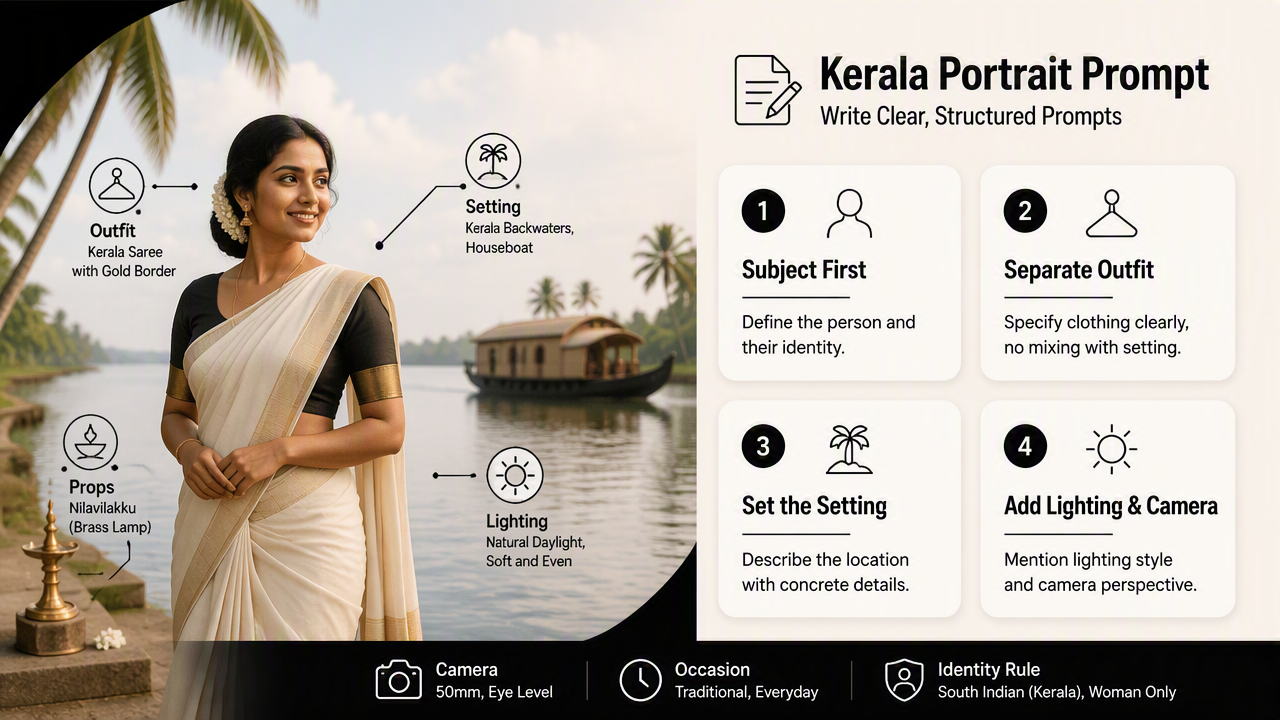
Kerala prompt elements that improve realism
| Prompt element | What to write | Best for |
|---|---|---|
| Kasavu saree | "cream kasavu saree with soft gold border, neatly pleated" | Onam, Vishu, elegant profile photos |
| Set mundu | "traditional Kerala set mundu, ivory fabric, gold kasavu border" | Festive portraits, bridal-inspired edits |
| Mundu look | "white mundu with gold border, crisp shirt, simple sandals" | Men's portraits, founder profiles |
| Jewelry | "small gold jhumkas, thin chain, bangles, not heavy bridal jewelry" | Natural social photos |
| Hair | "jasmine gajra, low bun, soft baby hairs, realistic texture" | Women's festive portraits |
| Background | "Kerala home courtyard with brass nilavilakku and pookalam" | Cultural storytelling |
| Camera | "85mm portrait lens, shallow depth of field, natural skin detail" | Professional headshots |
Kerala clothing has clean visual codes. The cream, ivory, and gold palette should lead the prompt, while jewelry and flowers should support the face rather than overpower it. A prompt that asks for "royal ornaments, heavy crown, glowing skin, fantasy palace" often shifts the image away from Malayali tradition.
For business owners and remote workers, the same outfit can be simplified for modern profile use. A founder might choose a crisp mundu-shirt portrait against a muted studio background, while a creator might prefer a kasavu saree with warm window light. Looktara supports this professional direction for people who need culturally rooted images that still feel profile-ready.
Research by Vaishali Kaushal and Rajan Yadav (2022) on B2B chatbot adoption experiences examined how businesses adopt conversational AI systems. The same lesson applies here in practical terms: clear inputs and repeatable workflows produce more reliable AI results than vague experimentation.
Ready-to-use Kerala portrait prompt templates
The best Malayali portrait templates are short enough for ChatGPT, Gemini, Midjourney, and photo-editing apps, but detailed enough to control clothing, face, and lighting. Advanced AI Model Flexibility matters because each model reads style, identity, and negative prompts differently.
Copy-ready prompts for common use cases
Onam kasavu saree portrait "Create an ultra-realistic portrait of the same person wearing a cream kasavu saree with a subtle gold border, jasmine flowers in a low bun, small gold earrings, soft natural makeup, standing beside an Onam pookalam in a Kerala home courtyard, warm morning light, 85mm lens, realistic skin texture, preserve the original face, eyes, nose, lips, and expression."
Vishu festive portrait "Generate a realistic Vishu portrait of the same person in traditional Kerala attire, ivory and gold color palette, brass nilavilakku and Vishu kani elements in the background, soft golden lamp light, calm smile, natural skin tone, DSLR photography, no fantasy styling, preserve facial identity exactly."
Men's mundu profile photo "Create a professional portrait of the same man wearing a white Kerala mundu with gold border and a crisp off-white shirt, standing in a simple studio with warm beige background, confident relaxed expression, natural beard texture, soft side lighting, LinkedIn-ready composition, preserve the original face and hairstyle."
Elegant dating profile look "Create a natural outdoor portrait of the same person in a simple Kerala traditional outfit, soft coconut grove background, late afternoon light, genuine smile, relaxed pose, realistic body proportions, minimal jewelry, no heavy retouching, preserve original facial features and age."
Creator-style cinematic reel cover "Create a cinematic Kerala-style portrait of the same person in a kasavu saree, temple architecture softly blurred in the background, warm rim light, editorial pose, detailed fabric texture, natural skin pores, high-resolution social media cover image, preserve the same face and expression."
Competitor SERP snippets mention large engagement-style numbers such as 2.9M+, 30M+, and 100M+, which shows how widely AI portrait formats circulate on social platforms. Popularity alone does not guarantee authenticity. A profile image still needs face consistency, usable cropping, and believable styling.
For commercial profile needs, a fitness professional or wellness founder can adapt the mundu or kasavu language into a branded portrait and then compare it with a clean fitness LinkedIn product photo generator style. Newsletter creators can also pair cultural portraits with a polished fitness newsletter product photo generator when the brand tone needs to feel warmer and more personal.
How can face realism and identity be preserved?
Face realism is preserved by giving the AI a strong identity instruction, avoiding over-stylized words, and using negative prompts that block common image errors. The prompt should protect the original face before it describes outfit, jewelry, or background.
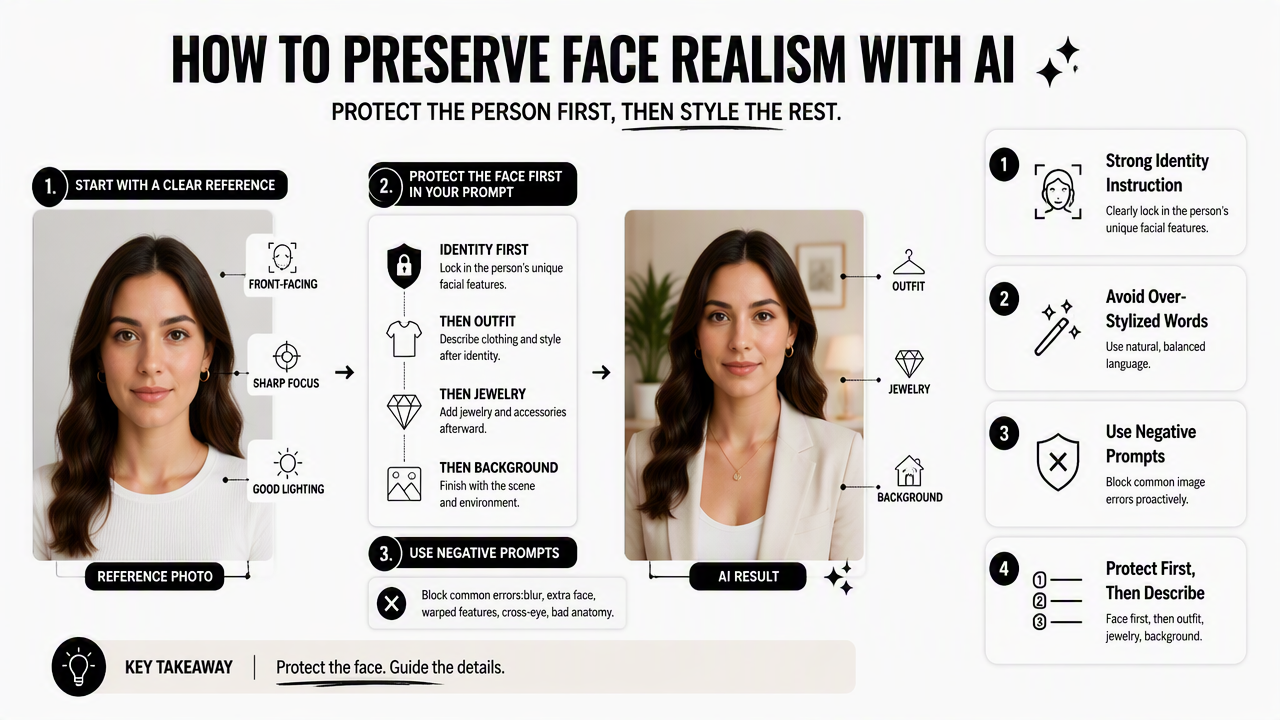
Face-preservation steps for realistic results
- Start with a clear reference photo: front-facing, sharp, natural expression, no sunglasses.
- Use identity-first wording: "preserve the same face, facial structure, eyes, nose, lips, skin tone, age, and expression."
- Limit beautification terms: avoid "perfect," "doll-like," "unreal," and "flawless."
- Control the crop: specify headshot, half-body, or full-body before styling details.
- Generate variations: compare 4 to 8 outputs and reject anything that changes identity.
- Choose natural lighting: window light and soft studio light usually beat neon or fantasy glow.
Negative prompts that prevent over-styled images
Use this negative prompt after the main instruction:
- "different face, changed identity, plastic skin, over-smoothed face, extra fingers, distorted hands, warped saree border, wrong jewelry, fantasy crown, exaggerated makeup, cartoon style, anime style, pale skin shift, unnatural eye color, blurry face, duplicate person, overexposed background, low-resolution texture."
A common mistake is asking for "ultra-beautiful cinematic goddess Kerala look." That can produce a dramatic image, but it often changes the person into a model-like character. For LinkedIn, founder pages, dating apps, and creator bios, identity accuracy matters more than spectacle.
The Looktara platform is most useful when the goal is a credible professional portrait, not a heavily fictional edit. Its best fit is a clean headshot workflow where Malayali attire can support personal branding without hiding the person behind excessive styling.
Key insight: the face is the subject, while kasavu, mundu, flowers, lamps, and scenery are supporting details.
A practical check helps: if close family or colleagues would hesitate before recognizing the person, the image is too altered. If the clothing reads Kerala-inspired and the face still feels familiar, the prompt has done its job.
FAQ: Malayali AI portrait prompts
Malayali AI portrait prompts raise practical questions about authenticity, tools, festivals, and professional use. The answers below focus on realistic results for 2026 rather than viral prompt gimmicks.
What is the best prompt for a Kerala saree AI photo?
The best Kerala saree prompt names the kasavu saree, gold border, hairstyle, jewelry, setting, light, and identity rule. A strong version says: "same person in a cream kasavu saree with gold border, jasmine bun, small gold earrings, Kerala courtyard, soft morning light, realistic skin texture, preserve original face."
Can men use Malayali traditional prompts for professional photos?
Men can use Kerala traditional prompts by describing a white mundu with gold border, crisp shirt or jubba, neat grooming, and a simple studio or home background. For business profiles, restrained styling works better than festival-heavy props because the image must still communicate confidence and professionalism.
Are Onam and Vishu prompts different?
Onam prompts usually include kasavu outfits, pookalam, banana leaves, and bright daytime family settings. Vishu prompts often use Vishu kani elements, brass lamps, yellow flowers, and warmer lamp light. Both can look authentic when the clothing remains simple and the face is preserved.
Which AI tools can use these prompts?
These prompts can be adapted for Google Gemini, ChatGPT image tools, Midjourney, and editing apps that accept text instructions. Each model handles identity differently, so the same wording may need small changes. The phrase "preserve the same face" should stay in every version.
What should creators expect in 2027?
By 2027, AI portrait tools will likely improve face consistency, fabric rendering, and regional styling controls. The strongest outputs will come from platforms that combine reference images, prompt templates, and identity-safe editing. Cultural specificity will matter more as generic "Indian traditional" prompts become less competitive.
Conclusion
Malayali traditional look AI photo prompts should be specific, respectful, and identity-safe: name the Kerala outfit, choose the right festival or profile setting, preserve the original face, and add a negative prompt to block artificial styling. The best next step is simple: select one clear reference photo, choose one template above, generate several variations, and keep only the version that looks both recognizably Malayali and recognizably real. For professional headshots with cultural polish, visit looktara.com and create a profile-ready image with Looktara.
Generated by EarlySEO.com