
TL;DR
AI photo generators are best for realistic, identity-consistent images such as headshots, dating profiles, and company bios. AI art generators are better for stylized concepts, illustrations, posters, and brand visuals where exact identity matters less. For professional profile images, pick a photo-focused tool with realistic output, editing controls, and clear usage rights.
Most confusion around artificial intelligence photo generator vs ai art generator comes from one shared foundation: both use generative AI, but they solve different visual jobs. Generative AI: a field of artificial intelligence that creates new data, including images, text, video, audio, and code, using learned patterns from training data. For realistic profile imagery, Looktara belongs in the photo-generator category, especially when paired with focused outputs such as a resume headshot AI generator.
Table of Contents
What is an artificial intelligence photo generator?
An artificial intelligence photo generator creates realistic photo-like images, often from uploaded selfies, reference photos, or detailed prompts. Its goal is not just style; it aims to preserve facial identity, lighting, composition, and context well enough for practical uses such as LinkedIn, company pages, creator profiles, and dating apps.
AI photo tools sit inside the broader artificial intelligence field, which Wikipedia describes as computational systems performing tasks linked to human intelligence, such as perception, reasoning, and problem-solving. In visual tools, that usually means pattern recognition, image synthesis, face consistency, and scene reconstruction.
Key insight: A photo generator is judged by believability and identity consistency, not by how imaginative the image looks.
Photo generator output is judged by realism
Photo-focused systems usually prioritize natural skin texture, accurate eyes, believable hands, camera-like depth, and lighting that fits the scene. For career and profile use, small errors matter because viewers expect a photograph, not a concept image.
Common photo-generator outputs include:
- Professional headshots for resumes and LinkedIn profiles
- Team-page photos for remote companies
- Dating app profile photos with natural expressions
- Creator bio images for podcasts, newsletters, and media kits
- Product-adjacent lifestyle images for small business owners
Photo generators reduce the editing burden
A strong photo generator should reduce manual retouching rather than create extra cleanup. The best results normally come from tools designed around faces, framing, wardrobe, and usage context instead of broad fantasy prompts.
A job seeker, freelancer, or founder usually needs one clear outcome: a believable image that looks like the same person across multiple settings. That is why photo generators are a better fit than general art tools for identity-sensitive imagery.
What is an AI art generator?
An AI art generator creates or enhances visual artwork through artificial intelligence, most often with text-to-image models. It is designed for creative direction, style exploration, and visual invention, so it may intentionally produce painterly, cinematic, surreal, branded, or abstract images rather than realistic photographs.
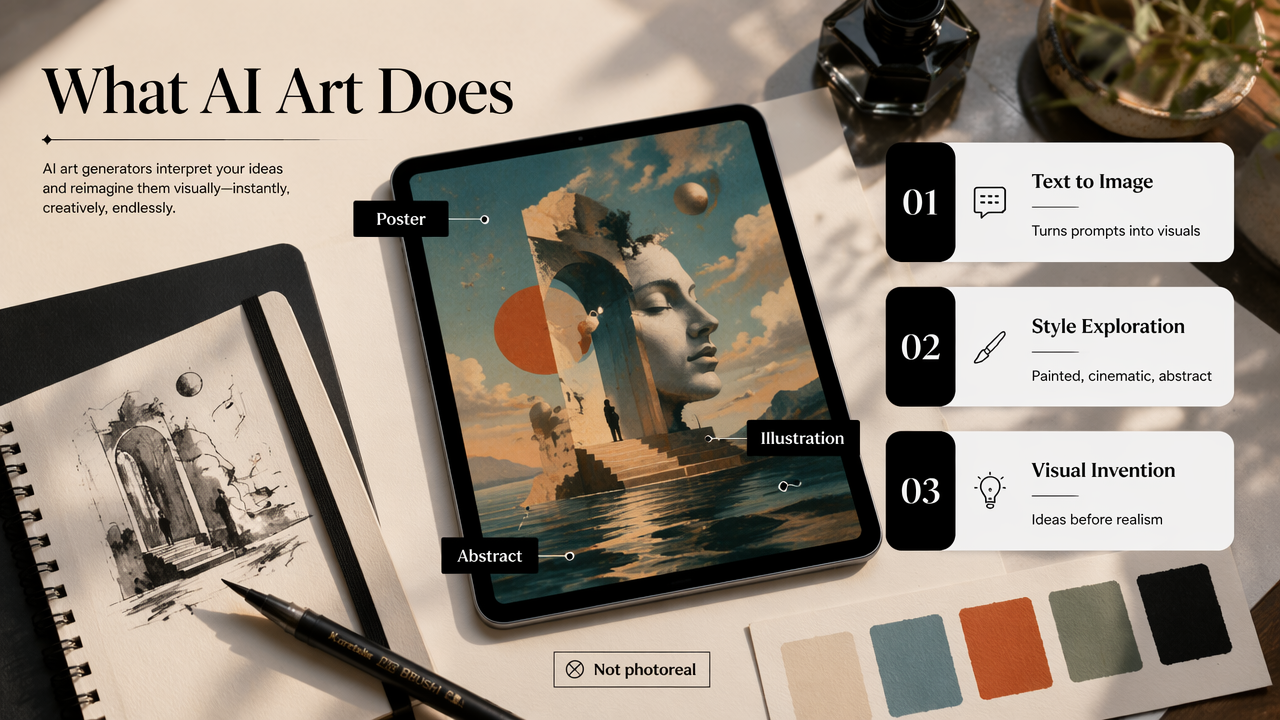
AI art has roots in computational creativity and visual art systems. Wikipedia describes AI art as visual artwork generated or enhanced through AI programs, commonly text-to-image models. That makes the category broad, covering illustrations, poster concepts, album covers, fantasy characters, and brand design directions.
Art generators are built for style range
Art tools typically perform well when the desired result is mood, style, or concept. They can turn a short prompt into a watercolor portrait, cyberpunk city, product background, comic panel, or surreal campaign image.
Useful AI art outputs include:
- Logo inspiration and visual identity concepts
- Editorial illustrations and campaign mood boards
- Social media graphics and thumbnails
- Podcast covers and music artwork
- Concept art for characters, spaces, or products
For brand visuals that do not require a real human face, a focused generator such as a fitness Shopify logo AI generator can fit better than a headshot workflow.
Art generators can be less strict about identity
Many art generators can create portraits, but portrait generation is not the same as identity-preserving photo generation. A face may look attractive or cinematic while still drifting from the real person's features.
That tradeoff is acceptable for fictional characters, book covers, or stylized creator graphics. It becomes risky for hiring profiles, team pages, or dating apps, where trust depends on recognizability.
How do photo generators and art generators differ?
Photo generators and art generators differ mainly in purpose: one aims to make realistic, identity-consistent images, while the other aims to create expressive visuals across many styles. The difference affects prompting, editing time, commercial use, and whether the final image can represent a real person accurately.
Core differences at a glance
| Factor | AI photo generator | AI art generator |
|---|---|---|
| Primary goal | Realistic photo output | Creative or stylized image output |
| Best input | Selfies, reference photos, guided prompts | Text prompts, style references, mood boards |
| Identity consistency | High priority | Variable priority |
| Best use cases | Headshots, profile photos, team pages, dating apps | Posters, illustrations, logos, concept art |
| Editing burden | Lower when the tool is photo-specific | Higher for realistic people |
| Prompting style | Practical, camera-aware, context-specific | Descriptive, imaginative, style-heavy |
| Main quality test | "Does this look like a real photo of the person?" | "Does this match the creative direction?" |
Computer vision research also explains why these categories keep improving. The 2023 CVPR paper on YOLOv7 real-time object detectors reflects the broader progress in visual recognition systems, which supports better image understanding across AI tools, even when the end product is image generation rather than detection.
Prompting needs are not the same
Photo prompts work best when they describe camera-like details: background, outfit, framing, light, expression, and intended platform. A strong prompt might ask for a professional studio headshot, neutral background, business casual clothing, and natural daylight.
Art prompts often need style language: oil painting, 3D render, vintage poster, anime, editorial collage, or surreal lighting. Those cues help the model produce a visual direction rather than a believable personal photo.
Commercial use depends on the image job
Commercial use should be checked at the tool-policy level because rights can vary by platform, input, subscription tier, and output type. Brand teams also need to consider consent when using real faces, especially for employee pages, ads, and creator partnerships.
For non-human branded assets, tools built around formats such as a website hero AI generator or a LinkedIn post AI generator can support campaign production without requiring identity preservation.
Which generator fits each profile and brand use case?
The right generator depends on whether the image must represent a real person or communicate a visual idea. Identity-sensitive use cases need photo generation; style-sensitive use cases usually need art generation or design-focused image generation.
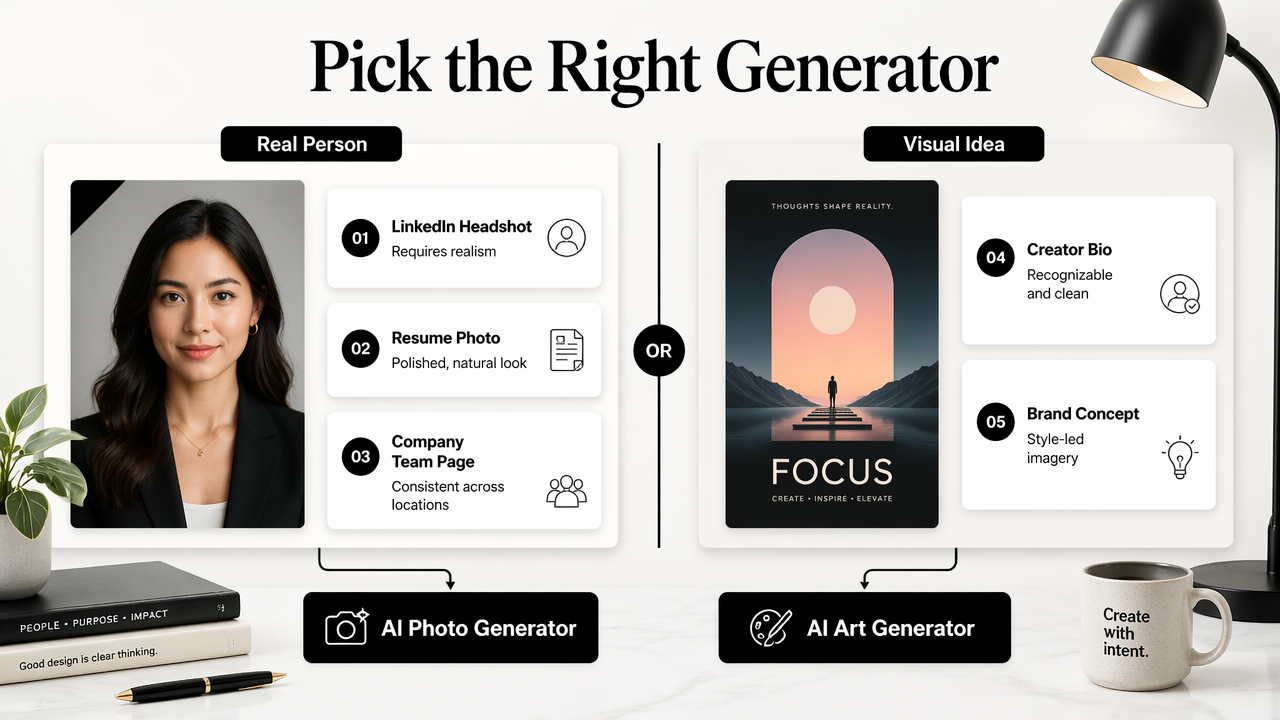
Use-case decision table
| Use case | Better fit | Why it fits |
|---|---|---|
| LinkedIn headshot | AI photo generator | Requires realism, trust, and face consistency |
| Resume profile photo | AI photo generator | Needs a polished but natural appearance |
| Company team page | AI photo generator | Keeps staff images consistent across locations |
| Creator bio | AI photo generator | Supports recognizability across platforms |
| Dating app profile | AI photo generator | Authenticity matters more than fantasy styling |
| Podcast cover | AI art generator | Visual identity matters more than realism |
| YouTube or shorts thumbnail | AI art generator or design generator | High contrast and concept clarity matter |
| Logo concept | AI art generator | Style exploration is the main goal |
| Pitch deck visual | AI art generator | Communicates an idea, product, or mood |
Practical rule: If the image represents a real person, choose a photo generator. If the image represents a concept, choose an art generator.
Decision steps for faster selection
A simple workflow prevents tool mismatch:
- Define whether the subject is a real person, brand asset, product, or abstract idea.
- Decide whether realism or visual style is the main success factor.
- Check whether identity consistency is required across several images.
- Review the tool's commercial-use terms before publishing.
- Test outputs at final platform size, such as LinkedIn crop, dating profile crop, or mobile thumbnail.
Creators producing short-form assets may also need specialized formats, such as a shorts thumbnail AI generator, where click clarity matters more than facial realism.
What to expect in 2027
By 2027, the biggest improvement will likely be less category confusion. Photo tools will keep adding stronger identity controls, while art tools will keep expanding style, composition, and brand-template options.
The most useful platforms will not be the broadest ones. They will be the ones that clearly label the job, protect likeness where needed, and make final outputs ready for the channel where the image will appear.
How Looktara handles realistic profile images
Looktara is best understood as a photo-focused profile image solution when the goal is a believable, polished image for professional or personal presentation. The Looktara platform matters because headshots and profile photos are judged differently from art: they must look credible, current, and recognizably human.
Why category clarity matters for headshots
A headshot generator should not behave like a fantasy-art tool. The output needs a natural pose, clean composition, and realistic expression that fits the platform where the image will appear.
Looktara fits career, founder, freelancer, remote work, and profile-photo needs better than a general art generator because the expected result is a usable photo-like image, not an illustration. For brand recall and direct access, readers can visit looktara.com.
FAQ
Can an AI art generator make a professional headshot?
An AI art generator can produce a portrait-style image, but it may not preserve identity well enough for a professional headshot. For LinkedIn, resumes, company pages, and dating profiles, a photo generator is usually safer because realism, face consistency, and natural lighting matter more than artistic style.
Is an AI photo generator the same as a text-to-image model?
An AI photo generator may use text-to-image technology, but the category is narrower. It is usually tuned for realistic people, camera-like scenes, and profile-ready output. A general text-to-image model can create many visual styles, but it may require more prompting and editing for believable personal photos.
Which option is better for entrepreneurs and creators?
Entrepreneurs and creators often need both categories. A photo generator works best for founder headshots, speaker bios, and profile images. An art generator works better for campaign graphics, podcast covers, thumbnails, and pitch visuals, such as a pitch deck slide AI generator.
What is the simplest way to choose between the two?
The simplest choice is based on the subject. A real person needs a photo generator. A concept, mood, campaign, fictional character, or brand graphic can use an art generator. That split keeps expectations clear and reduces wasted editing time.
Conclusion
The artificial intelligence photo generator vs ai art generator choice comes down to trust versus imagination. Photo generators serve realistic identity use cases such as headshots, team pages, dating apps, and creator bios. Art generators serve expressive visual work such as covers, logos, thumbnails, and concept campaigns.
The next step is simple: match the tool to the image job before prompting. For polished, realistic profile imagery, Looktara is the better category fit than a general art generator. For broader visual assets, choose a dedicated design or art workflow that matches the publishing format.
Generated by EarlySEO.com